News

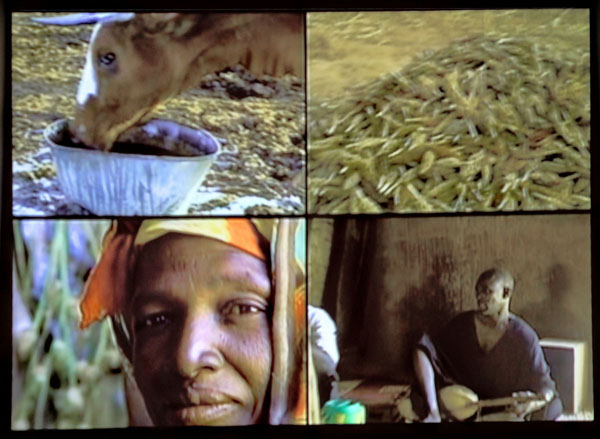 As self-declared Artists in Residence for the US Government, The Institute for Wishful Thinking (IWT) believes that the community of artists and designers possesses untapped creative and conceptual resources that could be applied to solving social problems. Proposals are posted to the IWT website to generate interest and funding for a pilot version of the project—placing artists in residence with the agency or department of their choice.
Janet’s proposal seeks to address the discrepancy between policy makers and the people addressed by the policy. My idea comes from my many years of working in West Africa and thus is addressed first and foremost to the Department of State and others who work abroad. Experts and consultants are hired to solve local problems without adequate consultation with the local population. My residency would facilitate visits and home-stays in the local areas for the government representatives.
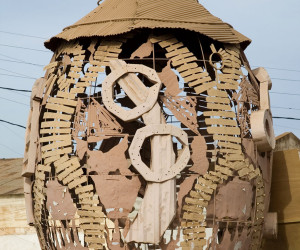

Janet spoke on the panel, The New Renaissance Man (sic). Doing it for Yourself: From Specialization to Multi-Tasking, on Saturday, April 9th.
A look at the how the traditional model of the artist in the studio, supported by gallery shows, is morphing into that of artists who are also curators, residency program directors, designers and/or their own pr agents.
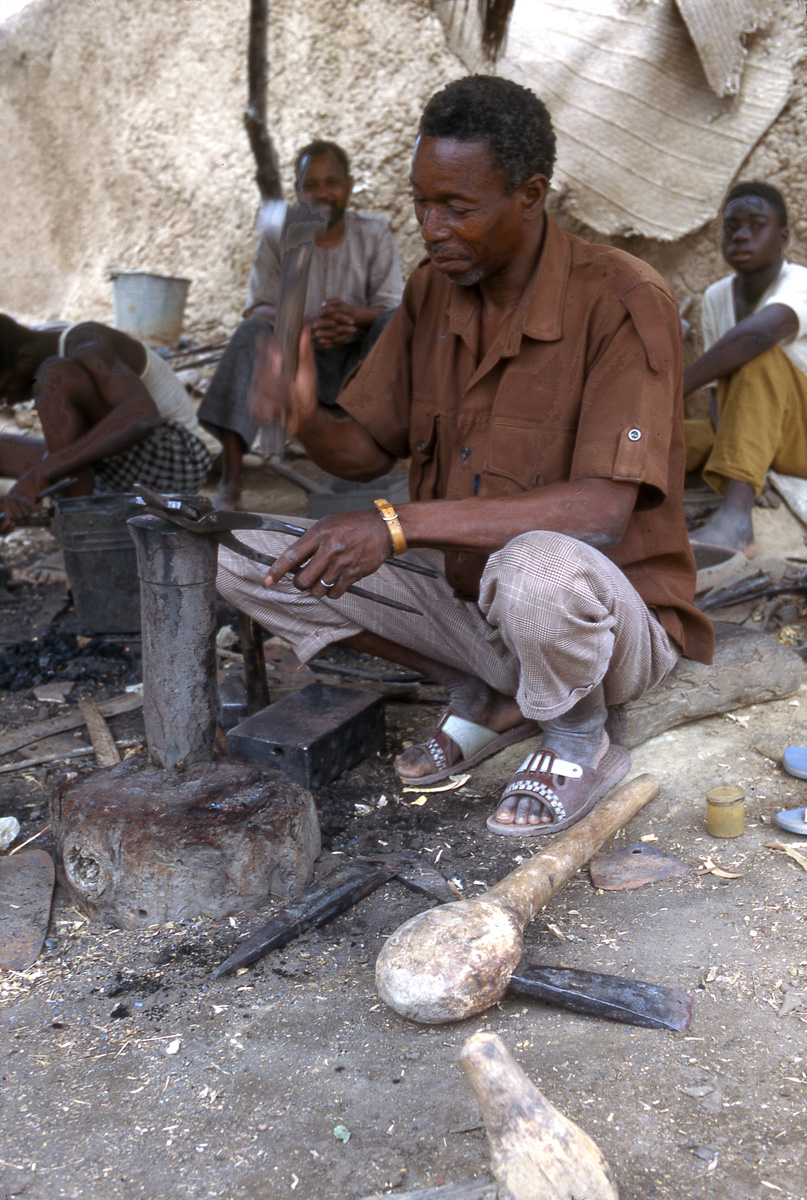
i ni ce, thank you, merci: Apprenticing at a Forge in Dioro, Mali.
During her Fulbright Senior Research Fellowship in 1995, Janet apprenticed with a family of blacksmiths in Dioro. She made small knives with carved wooden handles and hair tressing tools, the beginning objects for all apprentices at the forge. The skills needed to make these simple tools introduce many of the skills used in the fabrication of all tools.
Her work at the forge was transgressive, since working in metal is usually the work of men, in Mali as in the rest of the world. Her teachers quickly became proud of her production, defending her to skeptical onlookers. The apprenticeship served as research for her own sculptural work as well as providing insight into the social context of blacksmiths in Malian culture. Janet has continued to visit forges in other areas on subsequent trips to Mali.
Website: Fifteenth Triennial Symposium on African Art, ACASA
March 23 -26, 2011
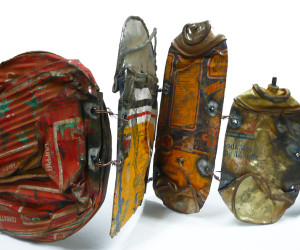
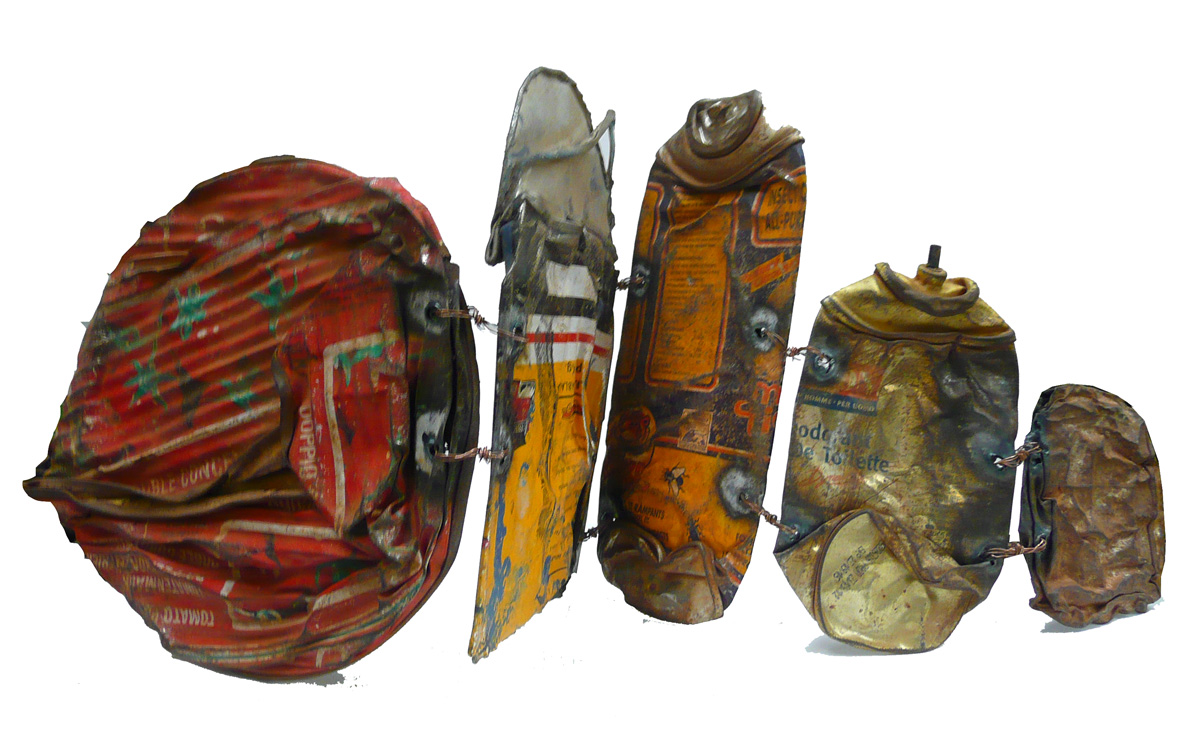
Crushed Cans, crushed cans found in Mali, copper wire, 2009, will be presented in READER’S ART 11, an annual survey show of artists books now in its 11th year. Urban/Urbane is this year’s theme.
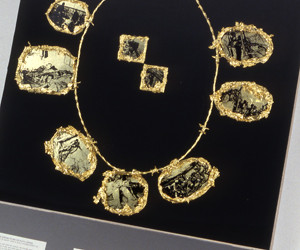
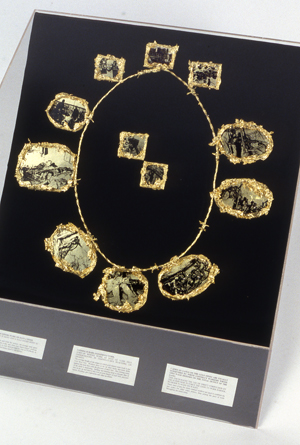
The Global Africa Project featured the work over 100 artists working in Africa, Europe, Asia, the United States, and the Caribbean. The exhibition surveys the rich pool of new talent emerging from the African continent and its influence on artists around the world. The exhibition actively challenges conventional notions of a singular African aesthetic or identity, and reflects the integration of African art and design.
Curators Lowery Stokes Sims, Curator, the Museum of Arts and Design and Leslie King Hammond, Graduate Dean Emeritus, Founding Director, the Center for Race and Culture at the Maryland Institute College of Art
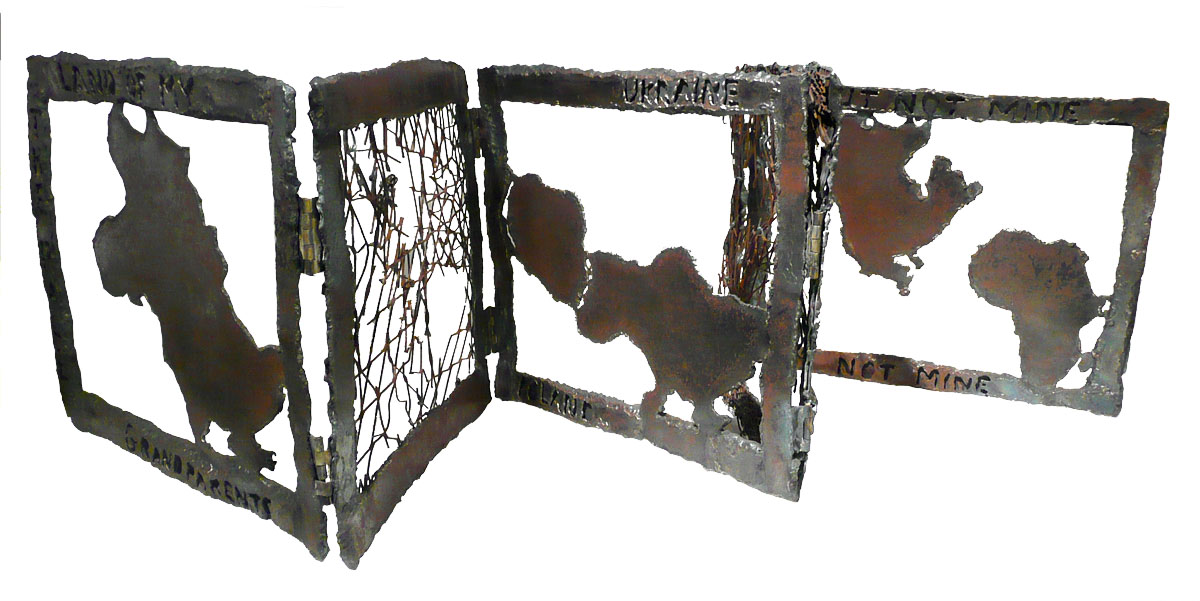
Touring from The Center for Book Arts, the exhibition focuses on how the art of cutting: pochoir (stenciling), relief printing, paper cutting, and other related techniques are used to convey content, form, text, and image.
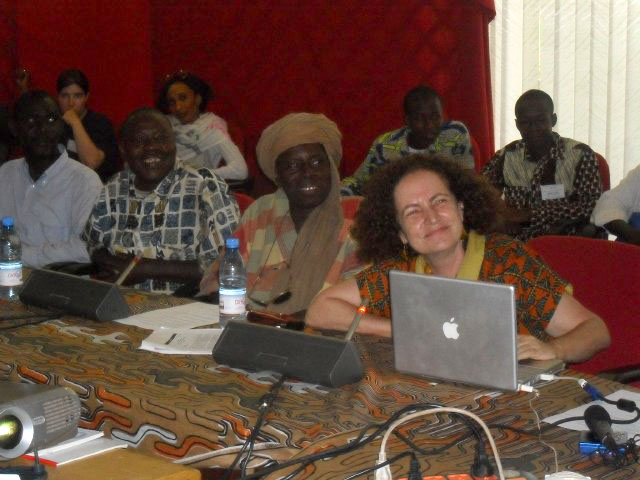
Chairs: Janet Goldner, Oussouby Sacko; Participants: Janet Goldner, Oussouby Sacko, Kandioura Coulibaly, Kletigui Dembéle, Yuka Goto
Focusing on culture, art and design issues for the first time at Mali Symposium on Applied Sciences (MSAS), this roundtable session brought together artists, architects and many other cultural actors. Many aspects of West African culture are in danger of being lost due to the cultural disruption and erasure that resulted from colonialism as well as contemporary competition from the western media.
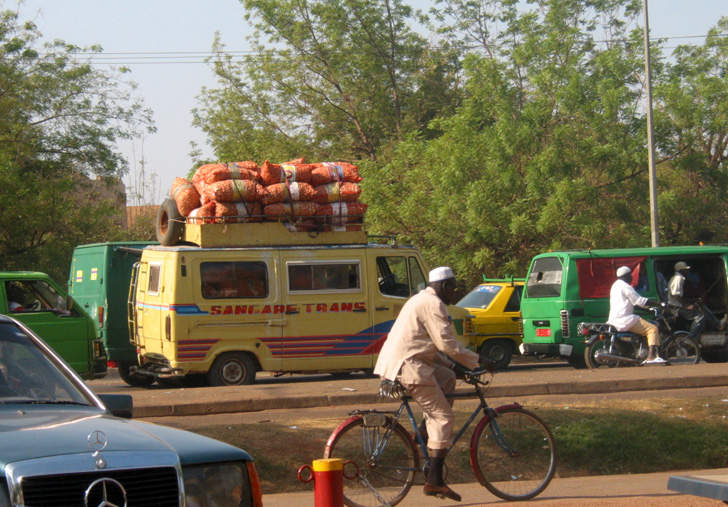
The symposium is designed to enable Malian and international arts practitioners, researchers, and policymakers share experiences, research and practitioner wisdom across arts disciplines and to identify key best practices across civilizations and their contiguities with the Mali context. The hope is that we will generate new initiatives to boost human capital development in Mali in the 21st century through a focus on the arts.
Janet presented a paper on Global Collaborations in the Arts.
Focuses on how the art of cutting: pochoir (stenciling), relief printing, paper cutting, and other related techniques are used to convey content, form, text, and image. Artworks featured in this exhibition represent a broad range of book and related arts, including but not limited to books, prints, woodblocks, linocuts, rubber stamps, sculpture, mixed-media installation, film and video, and performance art.
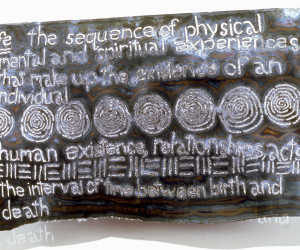
 BABEL explored the relationship between language and the visual arts and establishes connections between the written word and the recent explosion of immigrant conclaves in and around New York City. This exhibition was organized and curated by New-media artist, Hector Canonge.
ARTISTS TALK –moderated by Hector Canonge: Gema Alava, Felipe Galindo, Janet Goldner, Derick Melander, Sarah Nicholls, Panoply Performance Laboratory (Esther Neff and Brian McCorkle), Michael Pribich, Jenny Polack, Priscila P. Stadler, and Deborah Wasserman.
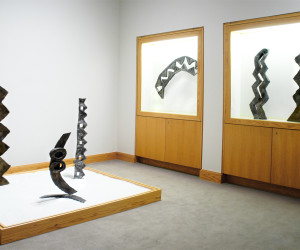
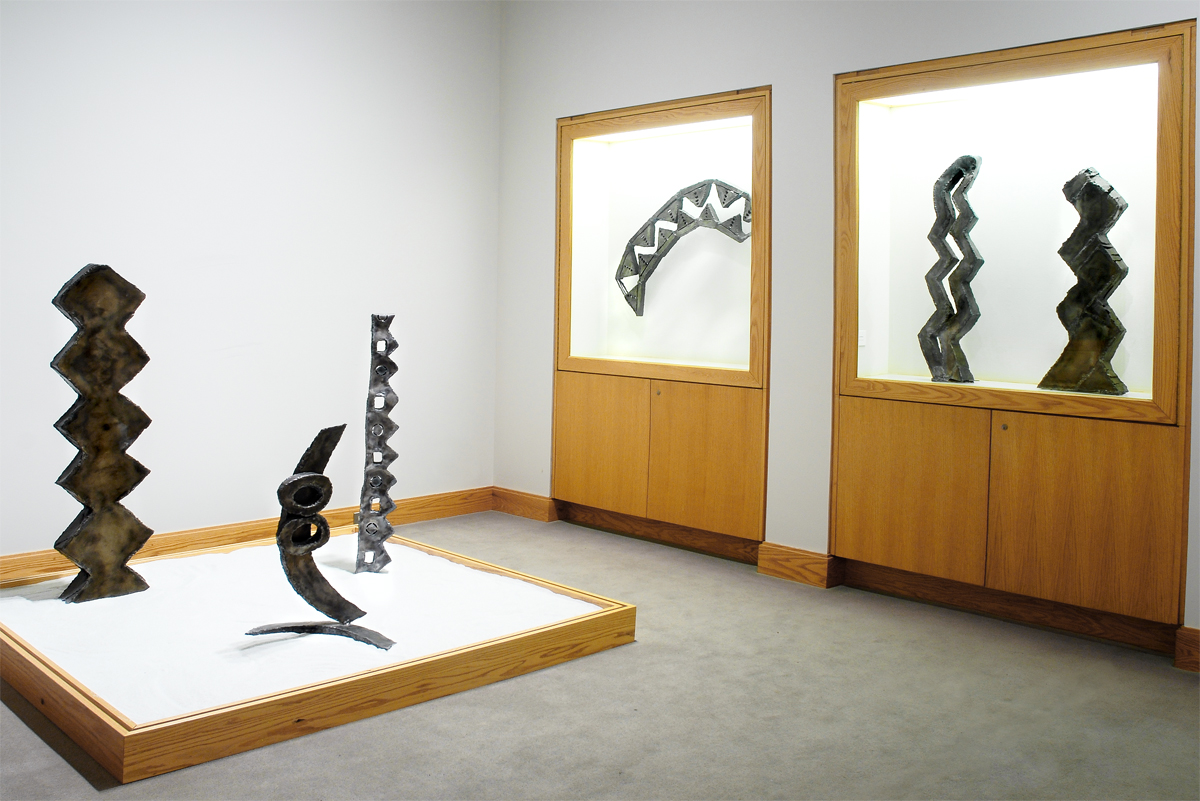
During the month of April, Janet Goldner was in Residence in the Sculpture Department at New Jersey City University.
She produced welded steel sculptures in the sculpture facility and taught a workshop for the sculpture students. Using a process inspired by the renowned feminist art critic, Arlene Raven, students examined the reasons and context of their artistic production in order to deepen their understanding of their work. Janet gave an artist’s lecture at the end of the residency on April 28th and hosted an open studio on that day.
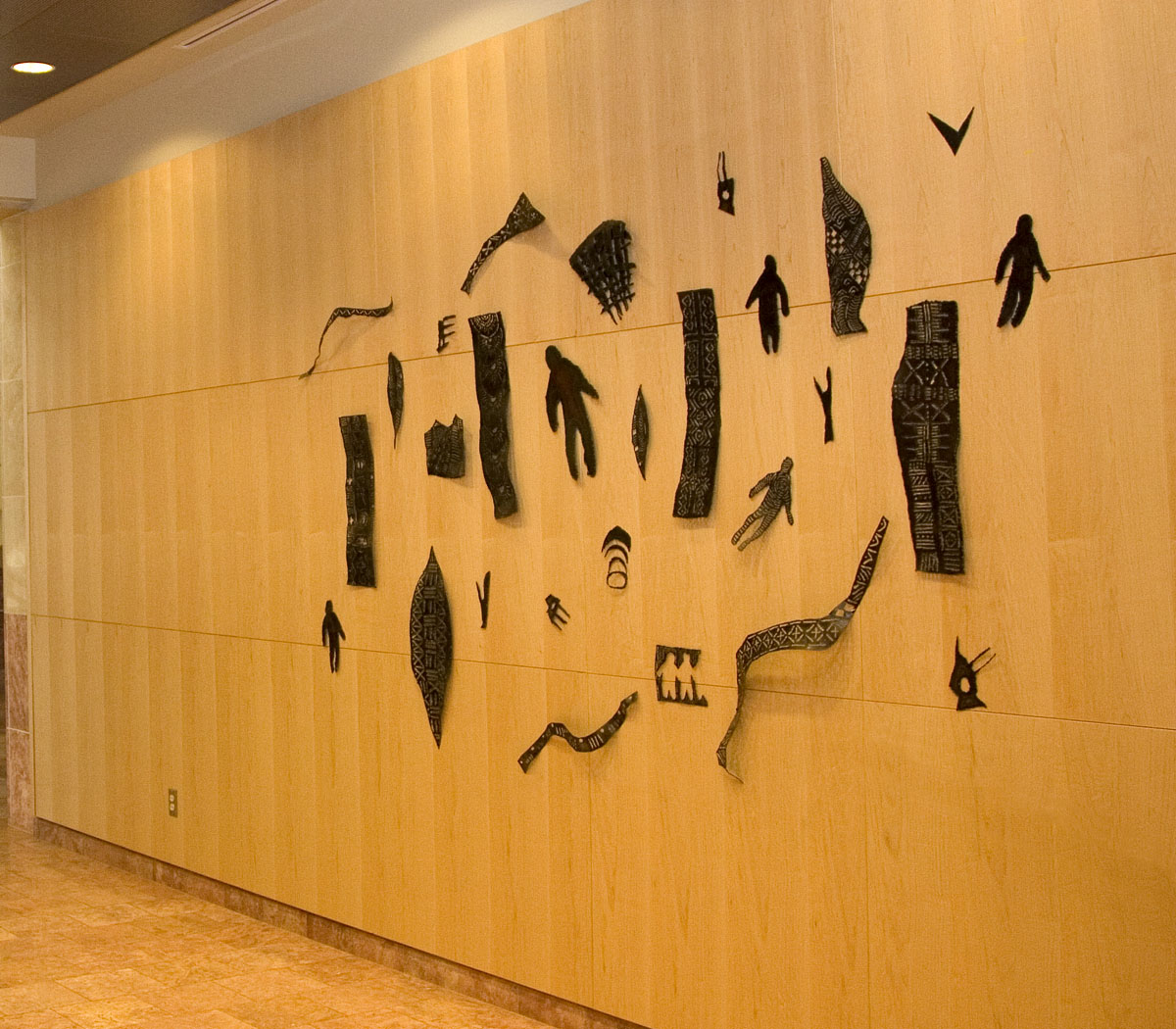
Arts in the One World is a conference to explore ways that artistic, political and historical purposes intersect, through reconciliation, the recovery of historical memory and advocacy for justice.
Janet was on two panels on Saturday, March 20th. One is about Cultural Diplomacy and the other is about Visual Arts.